

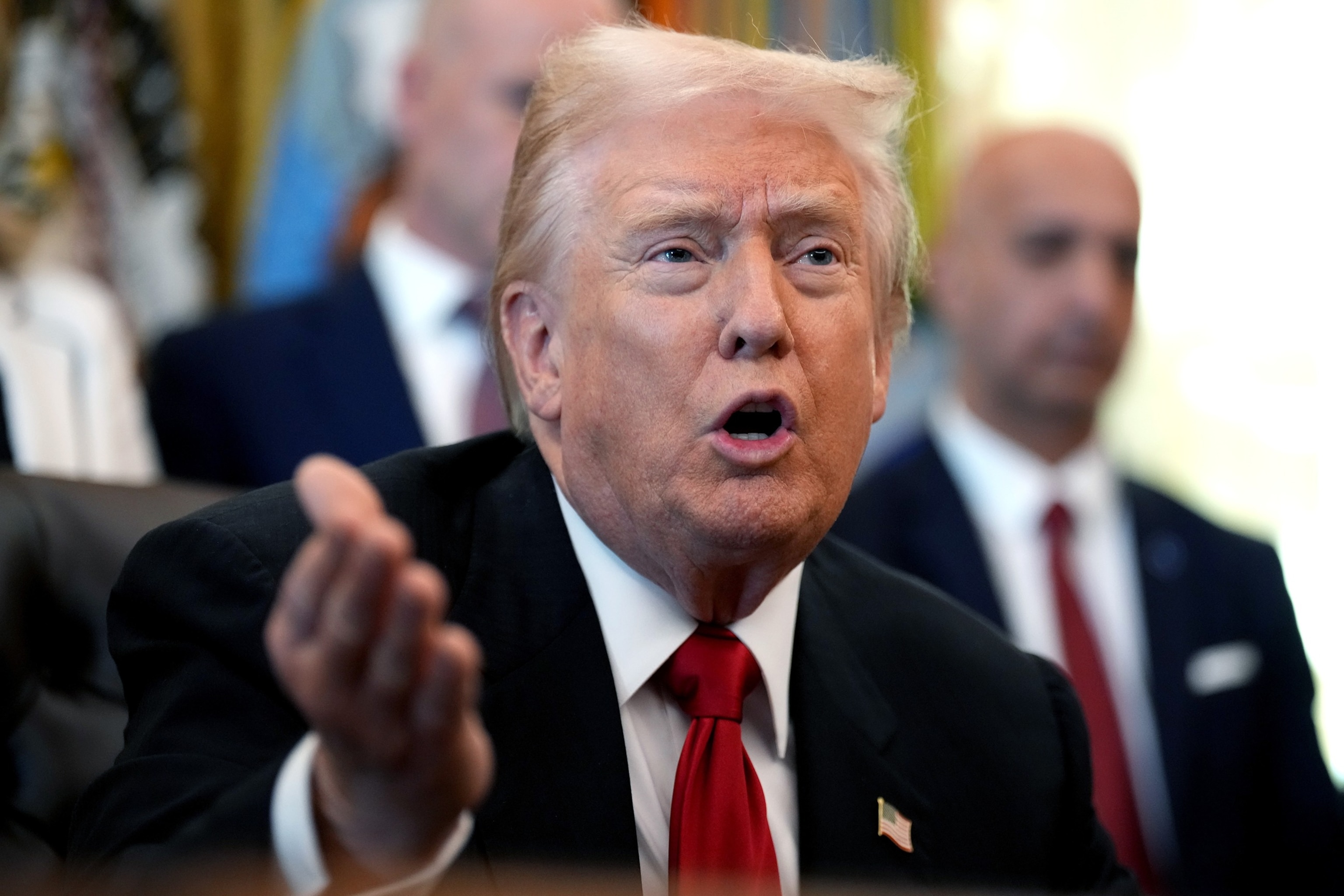
Former President Donald Trump has proposed a new economic measure aimed at easing the financial burden on American households. The plan, which involves issuing $2,000 rebate checks tied to tariffs, has sparked debate among economists, policymakers, and the public, raising questions about its potential impact on inflation, trade, and the broader economy.
Trump’s proposal emerges in the context of ongoing discussions about how to manage the economic fallout from international trade policies. Tariffs, which are taxes imposed on imported goods, have long been a tool used by the United States to protect domestic industries, influence foreign policy, and generate revenue. However, they can also lead to higher prices for consumers and complications in global trade relationships. By offering rebate checks equivalent to certain tariff revenues, the idea seeks to offset the increased costs faced by American households, essentially returning money collected from import taxes directly to citizens.
Grasping the operational aspects of the discount
The $2,000 rebate concept is designed to function as a direct compensation to consumers for higher prices resulting from tariffs on imported products. Essentially, if tariffs drive up the cost of goods, the government would send payments to eligible Americans to neutralize some of that financial pressure. Proponents argue that this approach could provide immediate relief for families struggling with rising prices, particularly for essential items like food, clothing, and electronics.
Critics, however, caution that the plan could have unintended consequences. While it may temporarily increase disposable income, some economists warn it could exacerbate inflationary pressures. By injecting cash into the economy without a corresponding increase in supply, prices might rise further, potentially diminishing the intended benefit of the rebate. Additionally, there are concerns about how such a program would be funded, its administrative feasibility, and the potential for political polarization surrounding its implementation.
Economic and Political Ramifications
The proposal also carries significant political weight. By linking the rebates to tariffs — a hallmark of Trump’s previous trade policies — the measure appeals to a base that supports aggressive protectionist strategies. It positions the former president as a champion of the “everyday American,” directly addressing concerns about the cost of living and economic inequality. At the same time, it revives debates over the effectiveness of tariffs themselves. Critics argue that tariffs often hurt domestic businesses that rely on imported materials, potentially undermining the long-term health of the economy.
From a broad economic standpoint, these rebates have the potential to shape how consumers act. With an injection of $2,000 per payment, households might boost their expenditures, thereby bolstering economic expansion in the near term. Businesses in retail and services could experience heightened demand, and specific industries might enjoy a temporary surge. However, economists are split on whether this initiative would result in lasting enhancements to the economic climate or simply offer a brief stimulus with restricted enduring impact.
Possible impacts on commercial ties
Another layer of complexity lies in the impact on international trade relations. Tariffs are a contentious tool, often sparking retaliatory measures from trading partners. While rebate checks might soften the domestic perception of tariffs, they do not eliminate the underlying trade barriers. Countries affected by U.S. tariffs may continue to impose their own tariffs or seek other measures to protect their industries, potentially leading to trade tensions.
Moreover, enterprises operating within international supply networks might encounter difficulties if tariffs and their associated reimbursements are not meticulously applied. Businesses dependent on imported resources could experience unpredictable cost variations, potentially disrupting manufacturing timelines and impacting job stability. Policymakers would be tasked with weighing the national advantages of rebates against the wider repercussions for both global trade and local industries.
The public response and feasibility
Public reaction to the rebate proposal has been mixed. Some Americans welcome the idea as a direct means to alleviate financial stress, particularly in a climate of rising living costs. Others view it skeptically, questioning the practicality of administering such payments and the long-term implications for the economy. Social media and news outlets have amplified both support and criticism, reflecting broader divisions in public opinion about trade policy, government spending, and economic intervention.
Implementation feasibility is another critical factor. Issuing $2,000 payments to millions of Americans would require robust administrative infrastructure, including accurate identification of eligible recipients, coordination with banking systems, and mechanisms to prevent fraud. Past experiences with stimulus checks and rebate programs highlight the challenges inherent in executing large-scale payments efficiently. Any delays or errors could undermine public confidence and reduce the program’s effectiveness.
While the proposal is still largely conceptual, it has reignited discussions about how best to support households facing economic pressures. The rebate checks illustrate a broader debate about the intersection of trade policy and domestic welfare: how to protect American industries without placing undue burden on consumers. Policymakers, economists, and the public will likely continue to scrutinize the plan’s feasibility, potential economic impact, and political ramifications in the months ahead.
Ultimately, the $2,000 tariff rebate proposal highlights the persistent conflict in economic governance: reconciling immediate citizen aid with enduring stability for both domestic and international economies. As discussions progress, it is yet to be determined if this plan will gain momentum, be altered, or simply become another suggestion among many designed to tackle living expenses.
Regardless of the outcome, Trump’s rebate idea has already sparked critical conversations about how trade and economic policies intersect with everyday life, highlighting the challenges of crafting policies that are both equitable and economically sound.