

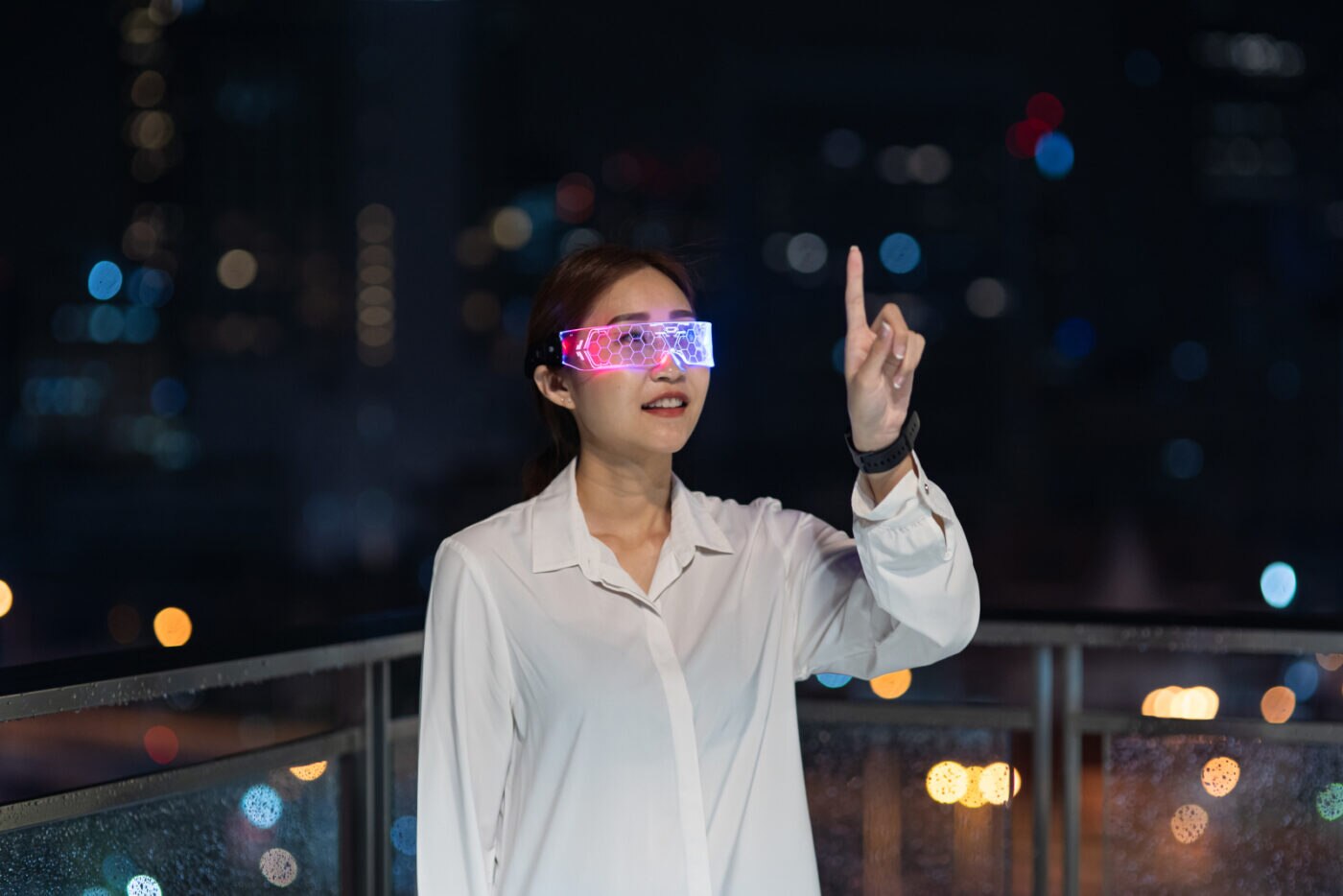
Augmented reality glasses and spatial computing platforms are shifting from specialized experimental gear to indispensable computing tools, a change driven by advances in hardware miniaturization, artificial intelligence, connectivity, and mature software ecosystems, all coming together to redefine how digital interactions blend with the physical environment and how people work, learn, and interact with information.
Focusing on Compact Form and Enhanced Wearability in Fundamental Design
One major trend centers on creating lighter, more comfortable AR glasses that look much closer to ordinary eyewear. Earlier headsets were heavy and consumed significant power, which slowed their adoption. Newer models emphasize improved weight balance, slimmer waveguides, and energy‑efficient components.
- MicroLED and advanced OLED displays enable higher brightness with lower energy consumption.
- Custom silicon, often designed in-house by major platform providers, reduces heat and improves battery life.
- Optical waveguide improvements allow wider fields of view without increasing lens thickness.
These improvements are vital for enabling broader use cases, from navigation and intricate enterprise workflows to long-lasting social interaction.
AI-Driven Contextual Insights and Advanced On-Device Intelligence
Artificial intelligence is emerging as the central driver of spatial computing, as contemporary AR glasses depend more and more on embedded AI to analyze their environment, identify objects, and interpret user intent instantly.
- Computer vision systems produce spatial representations of interiors, surfaces, and items, ensuring digital components are aligned accurately.
- Natural language processing supports dialogue-based interactions that substitute for traditional menus or tangible controls.
- Personalization engines adjust material based on user activity, geographic context, and unique preferences.
For example, enterprise AR platforms may provide rapid object identification that recognizes machinery parts and overlays guided instructions, which in turn helps cut down on training duration and mistakes.
Spatial Operating Systems and Holistic Platform Ecosystems
Spatial computing is no longer just about hardware; it depends on robust operating systems and developer platforms. A clear trend is the emergence of spatial operating systems that treat three-dimensional space as the primary interface.
Key features include:
- Durable spatial anchors built to preserve where digital elements remain positioned across successive sessions.
- Unified development frameworks that allow apps to run fluidly on glasses, headsets, tablets, and desktop platforms.
- App marketplaces and monetization approaches tailored expressly for immersive digital spaces.
This platform approach mirrors the evolution of smartphones, where strong ecosystems ultimately determined market leaders.
Bringing Together Cloud and Edge Computing
AR glasses are now often built as lightweight front-end devices that tap into robust cloud and edge systems, minimizing the requirement for intensive local processing while still supporting sophisticated capabilities.
- Edge computing cuts response times, enhancing spatial mapping and enabling instant collaborative actions.
- Cloud rendering delivers detailed 3D visuals that exceed the capabilities of local devices.
- Shared spatial environments let multiple users view and engage with identical digital elements at once.
Industrial and design teams are now using these features to work together on 3D models across continents, accelerating development cycles while reducing travel costs.
Enterprise-Driven Adoption Accelerating Organizational Growth
Although consumer adoption continues to rise, enterprise-focused needs increasingly guide key platform choices, with industries like manufacturing, healthcare, logistics, and field services demonstrating a clear return on investment.
- Remote assistance tools reduce equipment downtime and travel expenses.
- AR-guided assembly and maintenance improve accuracy and speed.
- Medical visualization tools assist in surgical planning and training.
Market data from industry analysts consistently shows that enterprise AR deployments can deliver task-specific productivity gains of roughly 20 to 30 percent.
Privacy, Security, and Ethical Design
As AR glasses constantly monitor their surroundings, growing privacy and security worries are influencing both technological development and regulatory frameworks, prompting platforms to adopt clearer recording signals, on‑device data handling, and more rigorous permission controls.
Trends in this area include:
- On-device processing to limit unnecessary data transmission.
- Enterprise-grade encryption for spatial maps and visual data.
- Design standards that signal when cameras or sensors are active.
Trust is steadily emerging as a crucial factor that sets consumer-facing products apart.
Interoperability and Open Standards
A noteworthy shift also centers on enhancing how smoothly devices and platforms work together, with developers and businesses progressively pursuing standards that reduce lock-in and support the exchange of spatial data.
- Versatile, open file formats created for handling 3D assets and spatial mapping tasks.
- Cross-platform APIs that enable tracking, gesture-based interactions, and the application of spatial anchors.
- Seamless interoperability spanning AR glasses, mixed reality headsets, and mobile devices.
This trend boosts ecosystem vitality while speeding up innovation by lowering development barriers.
The Broader Shift Toward Ambient Computing
AR glasses and spatial computing platforms illustrate a broader evolution toward ambient computing, a space where technology recedes into the background and responds naturally to human behavior, with screens no longer confined to fixed rectangles as information appears exactly when and where it is needed.
The convergence of lightweight hardware, intelligent software, and connected infrastructure suggests a future where digital layers are seamlessly woven into physical spaces. As these trends mature, spatial computing is poised to become as fundamental as mobile computing, reshaping daily life not through spectacle, but through subtle, persistent presence.