
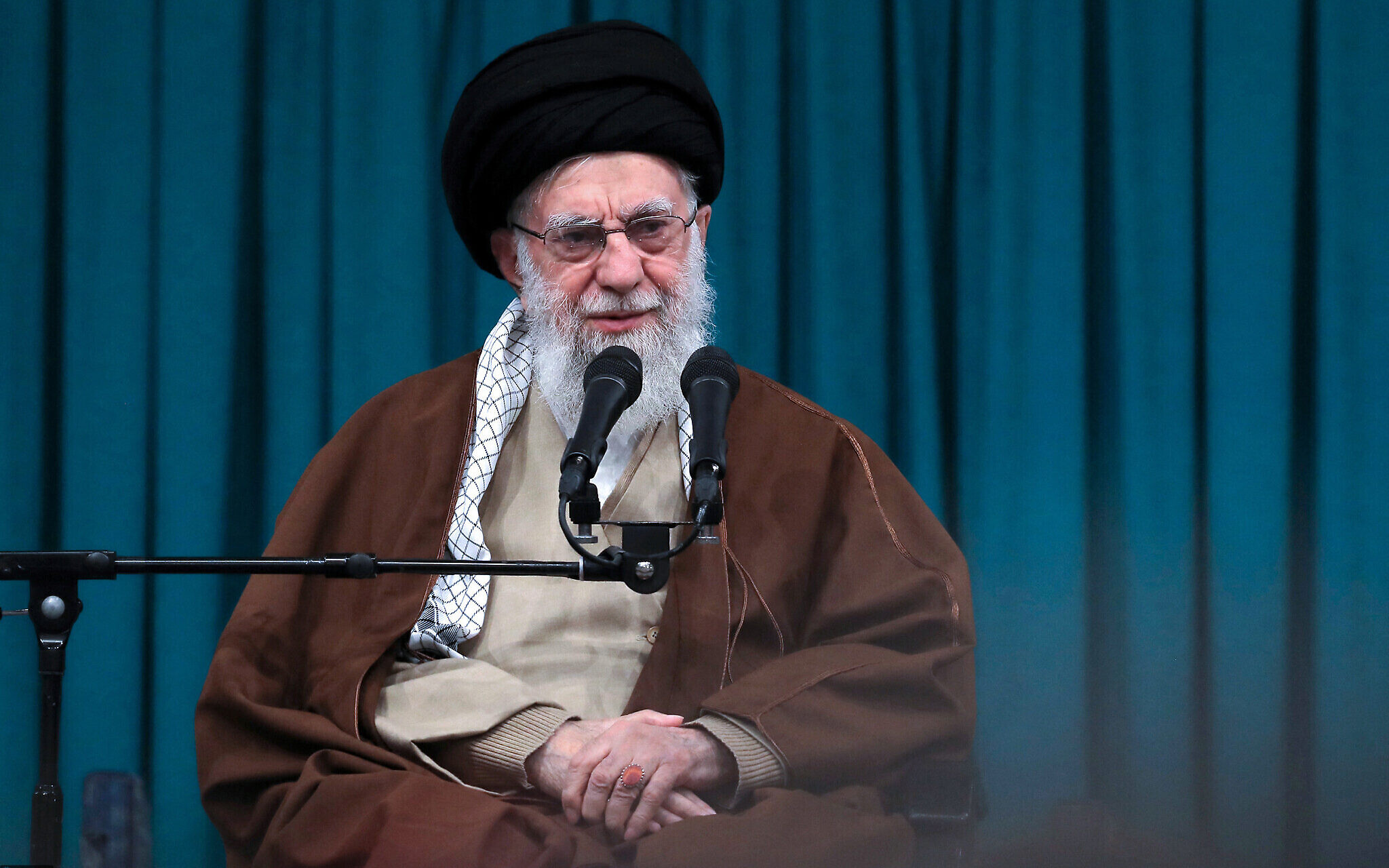
Iran’s Supreme Leader recently expressed that the United States has failed to gain any advantages from its military actions in the area. This comment arises amidst persistent tensions between the two countries, underscoring the intricate geopolitical situation that keeps shifting in the Middle East.
The Supreme Leader’s comments reflect a broader narrative in Iran regarding the impact of U.S. military actions. Over the years, Iran has faced various forms of pressure from the United States, including sanctions and military interventions. Such actions have been met with strong resistance from Iranian leadership, who argue that these strategies have not only failed to weaken Iran but have, in fact, fortified its resolve.
This perspective is rooted in a history of conflict and rivalry between the two nations. Following the 1979 Iranian Revolution, relations soured dramatically, leading to decades of hostility. The U.S. has consistently viewed Iran’s regional influence with suspicion, particularly concerning its support for proxy groups and its nuclear program. Conversely, Iran perceives U.S. actions as an attempt to undermine its sovereignty and destabilize the region.
In the scenario of military actions, the Supreme Leader’s declaration emphasizes the view that these maneuvers have turned out to be counterproductive for the U.S., rather than meeting their planned goals. Iranian representatives claim that military interventions have merely intensified anti-American feelings and bolstered their resolve to withstand foreign pressure. This viewpoint strongly resonates within Iranian society, where past grievances significantly influence public opinion.
Additionally, the Supreme Leader highlighted that the U.S. not only did not reach its objectives but also intensified instability in the area. The consequences of U.S. military interventions have frequently resulted in disorderly power vacuums, worsening conflicts in nearby nations like Iraq and Syria. This instability is considered by Iranian officials as proof of the harmful outcomes of U.S. engagement in Middle East matters.
Iran’s leadership asserts that the nation has adjusted and prospered despite challenges. The Supreme Leader highlighted Iran’s strength in confronting sanctions and military risks, claiming the country has built a strong defense approach and a self-reliant economy. This theme of perseverance is a central part of Iranian identity and is often used by leaders to gain public backing.
As tensions continue to simmer, the rhetoric surrounding U.S. military strikes is likely to remain a focal point in Iranian discourse. The Supreme Leader’s comments serve as a reminder of the deep-seated animosities that persist between Iran and the U.S., influencing both domestic and foreign policy decisions. Iranian officials are keen to project an image of strength and defiance, particularly in the face of external pressures.
Furthermore, the scenario is made even more intricate by the participation of additional local players. Nations like Israel and Saudi Arabia frequently support U.S. objectives in the area, considering Iran to be a major danger to their safety. This interaction introduces additional complexity to an already tense geopolitical environment, as different countries manage their goals concerning U.S. activities and Iranian sway.
Looking forward, the possibility of discussions between the United States and Iran is still unsettled. Although there have been efforts to initiate talks, especially in relation to Iran’s nuclear agenda, developments have been irregular and filled with obstacles. The statements from the Supreme Leader indicate a doubt about U.S. motives, which could obstruct any chance of rapprochement.
In summary, the statement by Iran’s Supreme Leader that the United States has achieved nothing from its military actions suggests a broader story of defiance and strength in Iranian society. With ongoing tensions between the two countries, the complexities of their historic connection continue to influence present-day developments. The interaction of regional dynamics and the historical context of previous conflicts is expected to impact future engagements, making it crucial to comprehend the fundamental motivations and viewpoints of both parties. The future is unpredictable, but long-standing hostilities and geopolitical facts will certainly influence the trajectory of U.S.-Iran relations for the foreseeable future.