International

Your blog category

Why nuclear energy is back in public debate

Why nuclear energy is back in public debate

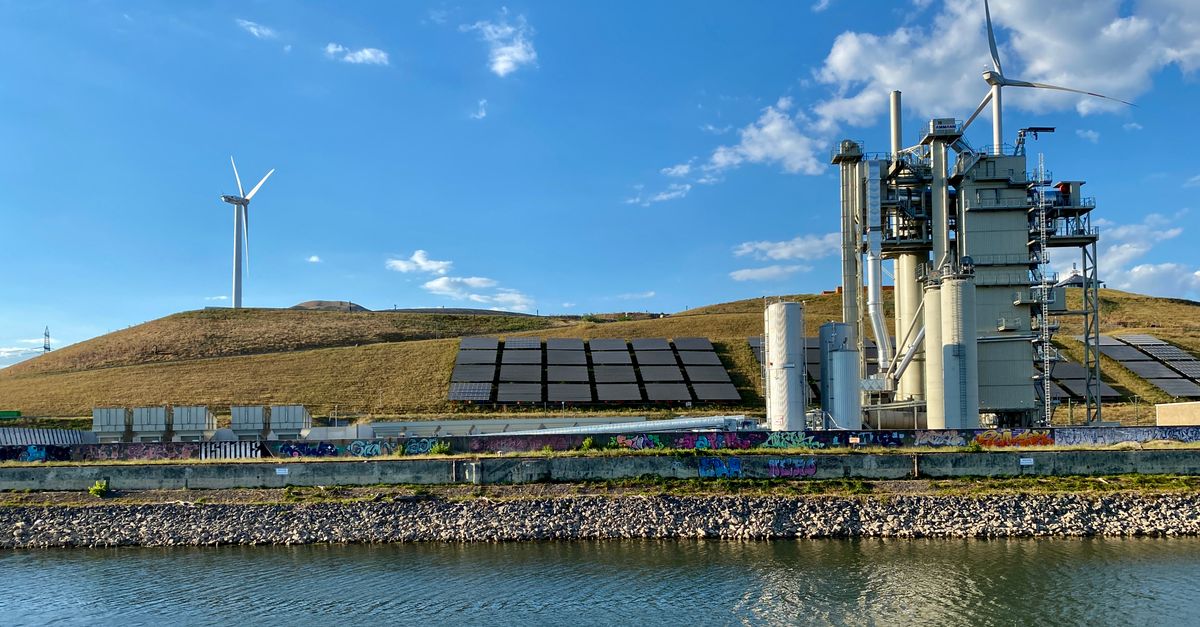
Nuclear power has once again moved to the forefront of global public and policy discussions, driven by a convergence of factors such as climate commitments, energy security needs, technological progress, market developments, and evolving public sentiment, shifting the conversation from ideological arguments to practical considerations about balancing deep decarbonization with dependable electricity generation.Key drivers behind renewed attentionClimate commitments: Governments and corporations aiming for net-zero emissions by mid-century face the need for large amounts of firm, low-carbon electricity. Nuclear’s near-zero operational CO2 emissions make it a candidate for supplying baseload and flexible power to support electrification of transport, industry, and heating.Energy…
Read More
Why oceans matter for climate and for the economy

Understanding the Link Between Oceans, Climate, and Economy

Oceans as the planet’s dominant climate regulatorThe global ocean covers roughly 71% of Earth’s surface and acts as the primary regulator of climate. It absorbs and redistributes heat and carbon, moderating atmospheric temperature swings, determining weather patterns, and sustaining life-supporting biogeochemical cycles. Two fundamental roles stand out:Heat storage: The ocean has taken up the vast majority of excess heat from greenhouse gas emissions—commonly estimated at over 90% of the planet’s stored excess heat—slowing atmospheric warming but creating long-term thermal inertia that locks in future change.Carbon sink: The ocean absorbs a large fraction of human-emitted CO2—roughly a quarter to a third…
Read More
How standards shape trade and who gets locked out

Trade Dynamics: How Standards Create Access or Exclusion

Standards encompass the rules, specifications, testing approaches, and conformity procedures that define the qualities products and services must meet to access a market, covering everything from technical requirements for home appliances and sanitary guidelines for meat to data‑protection practices and private sustainability certifications set by multinational purchasers. By cutting information imbalances and enhancing interoperability, well‑crafted standards can reduce transaction costs, strengthen consumer confidence, and stimulate trade. Yet these same standards may also function, deliberately or not, as obstacles that limit rivals, divide markets, and alter global value chains. Their distributional consequences are significant, as the gains, burdens, and exclusions they…
Read More
What makes a franchise model attractive compared to company-owned growth?

Why Franchise Models Outshine Company-Owned Expansion

Businesses aiming to expand often confront a pivotal decision: pursue growth through company-owned outlets or embrace a franchise model. Although both approaches can achieve scale, franchising has become particularly compelling in sectors like food service, retail, fitness, and hospitality. Its strength comes from spreading risk, speeding up expansion, and tapping into local entrepreneurial drive while preserving consistent brand standards.Capital Efficiency and Faster ExpansionOne of the strongest advantages of franchising is capital efficiency. In a company-owned model, the brand must fund real estate, build-outs, equipment, staffing, and operating losses during ramp-up. This can severely limit the speed of expansion.Franchising shifts much…
Read More
What critical minerals are and why they’re contested

Understanding Critical Minerals: Why They’re So Highly Contested

Critical minerals are naturally occurring elements and compounds that modern economies depend on for manufacturing, energy transition, and defense, but that face concentrated or fragile supply chains. Governments and analysts typically assess criticality by weighing two dimensions: the mineral’s economic importance for key technologies and the risk that supply will be disrupted. That combination — high demand and high vulnerability — is what makes a mineral “critical.”Why they matter nowThe global shift to electrification, renewable energy, digital infrastructure, and advanced defense systems has multiplied demand for certain minerals. Lithium, cobalt, nickel and graphite are central to rechargeable batteries; rare earth…
Read More
Why biodiversity is an economic security issue

Biodiversity: Foundation of Economic Security

Biodiversity — the variety of life across genes, species and ecosystems — is not an environmental abstract reserved for scientists and conservationists. It underpins the goods, services and resilience that modern economies depend on. When biodiversity declines, the effects cascade through supply chains, public budgets, corporate balance sheets and national stability. Treating biodiversity as an economic security issue reframes it from a conservation priority to a fundamental component of national and global economic resilience.How biodiversity links to economic securityProvisioning services and supply chains. Biodiversity supplies food, timber, medicines, fibres and genetic material. Agricultural yields, fisheries output and pharmaceutical pipelines all…
Read More