
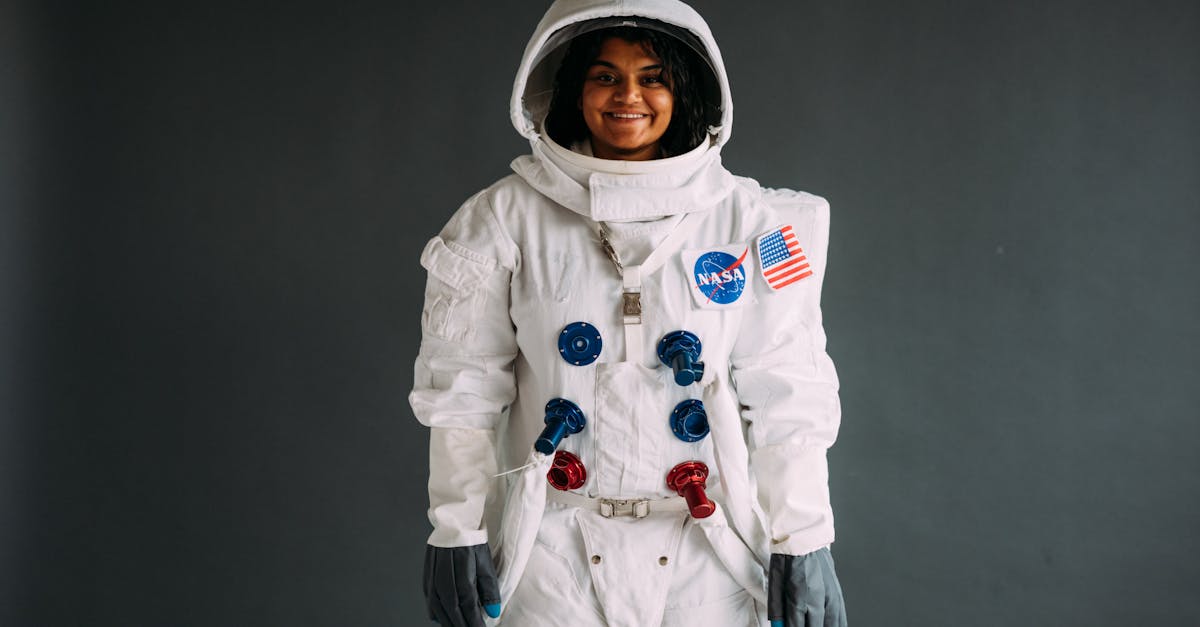
Following nearly thirty years of distinguished service, NASA astronaut Suni Williams has revealed her retirement, drawing to a close a career shaped by resilience, leadership, and groundbreaking accomplishments. Her final assignment, an unforeseen nine-month stretch in orbit during Boeing’s Starliner test mission, has risen as a defining moment in contemporary space exploration.
The announcement, confirmed by NASA on Tuesday, formally ends Williams’ tenure in the astronaut corps and transforms what was meant to be a short-duration test flight into her final journey to space. While the agency did not specify the precise timing behind her decision, the retirement caps a career that began in 1998 and spanned some of the most transformative years in human spaceflight. From the Space Shuttle era to commercial crew vehicles, Williams’ professional path mirrors NASA’s own evolution.
In a statement released through the agency, Williams expressed gratitude rather than finality. She described space as her “absolute favorite place” and reflected on the privilege of flying three times during her career. Her words underscored a sense of fulfillment rather than departure, suggesting a closing chapter written on her own terms, shaped by decades of preparation, discipline, and discovery.
A career shaped by exploration and transition
Williams’ first spaceflight took place in 2006, when she traveled to the International Space Station aboard Space Shuttle Discovery. At the time, NASA was still relying on the shuttle fleet as its primary means of human access to low Earth orbit. Her return to space in 2012, this time aboard a Russian Soyuz spacecraft, reflected a changing geopolitical and operational landscape, as the agency leaned on international partnerships following the retirement of the shuttle program.
Across these missions, Williams became a familiar presence aboard the space station, contributing to scientific research, station maintenance, and international collaboration. Her work was not limited to technical tasks; she also became a public face of human spaceflight, known for her calm demeanor, physical resilience, and willingness to push the boundaries of what astronauts could accomplish in orbit.
Her final assignment, nonetheless, thrust her into the global spotlight in a way few astronauts ever encounter. Tasked with helping evaluate Boeing’s Starliner capsule during its inaugural crewed mission, Williams and fellow astronaut Butch Wilmore anticipated spending about a week aboard the station. Instead, technical issues with the spacecraft prolonged their mission to more than nine months, transforming what was meant to be a straightforward test into an extended display of resilience and adaptability.
The Starliner mission and its unforeseen extension
The Boeing Starliner mission was conceived as a pivotal step within NASA’s Commercial Crew Program, aiming to validate the spacecraft for routine astronaut transport. Although the capsule achieved docking with the International Space Station, multiple technical complications surfaced mid-flight, such as thruster irregularities and gas leaks. Following an extensive review, NASA opted to avoid the risks of a crewed return and ultimately brought the Starliner back to Earth without astronauts.
For Williams and Wilmore, this choice resulted in remaining on the station far longer than initially anticipated, and although the delay came unexpectedly, both astronauts repeatedly stressed that they were thoroughly prepared for such scenarios, as long-duration missions are common on the station and Williams’s extensive background made her especially well-suited to the challenge.
Their extended stay drew worldwide attention, not because of any crisis, but due to the professional manner in which the situation was managed. Williams often remarked that she enjoyed her time in orbit and valued the chance to continue contributing to station duties and scientific research. By the time she returned to Earth aboard a SpaceX Crew Dragon capsule in March 2025, the mission had taken on symbolic meaning as a reflection of resilience and cooperation among programs and companies.
Records, milestones, and personal firsts
Beyond individual missions, Williams’ career is distinguished by a series of records that place her among the most accomplished astronauts in NASA history. Over the course of her flights, she accumulated 608 days in space, the second-highest total for any NASA astronaut. This figure reflects not only opportunity, but trust—long missions are assigned to astronauts with proven reliability and leadership.
Her time outside the spacecraft is equally notable. Williams logged 62 hours of spacewalking across nine extravehicular activities, making her the most experienced female spacewalker and placing her among the top spacewalkers worldwide. These hours represent some of the most physically demanding work astronauts perform, involving repairs, upgrades, and installations critical to the station’s continued operation.
Williams also became known for combining athletic achievement with scientific curiosity. In 2007, she completed a marathon aboard the space station, running on a treadmill while tethered to prevent floating away. Five years later, she became the first person to complete a triathlon in space, adapting swimming and cycling to the constraints of microgravity. These feats were not novelty acts, but demonstrations of how human physiology and motivation adapt beyond Earth.
Leadership and legacy within NASA
Colleagues and NASA leadership have regularly emphasized how Williams’ impact extends far beyond her technical achievements. Vanessa Wyche, director of NASA’s Johnson Space Center, portrayed her as a trailblazing figure whose work will motivate generations to come. This acknowledgment underscores Williams’ standing as a mentor, commander, and guiding presence within the astronaut corps.
Her remarks at the time of her retirement reflected this wider outlook, as she shifted attention away from individual accomplishments and highlighted the shared contributions driving space exploration, including the engineers, researchers, and global collaborators who enable each mission. She underscored the role of the International Space Station as a cornerstone for upcoming ventures, linking her professional journey to humanity’s advancing efforts toward the Moon and Mars.
This focus on continuity stands at the heart of Williams’ legacy, as she contributed to missions that broadened scientific knowledge and helped confirm the reliability of systems and procedures designed for more distant exploration; in doing so, her career becomes a link across generations, uniting the shuttle era, international cooperation, and the emergence of commercial spacecraft.
A well-traveled route toward retirementThe future of Starliner and Williams’ final words on the program
Questions remain about the future of Boeing’s Starliner capsule. NASA has indicated that the spacecraft’s next flight will likely be uncrewed, allowing engineers to address the technical issues encountered during Williams and Wilmore’s mission. The timeline for a return to crewed flights has not been finalized.
Despite the ongoing uncertainties, Williams has continued to speak favorably about the spacecraft, and in her post‑flight remarks she highlighted its strengths while conveying trust in the efforts underway to address remaining concerns. Her comments offered a balanced, engineering‑minded view that recognized the existing challenges without undercutting the wider significance of the program.
This balanced view reinforces the credibility Williams has built over her career. Rather than distancing herself from a mission that encountered difficulties, she framed it as part of the iterative process inherent in spaceflight. Her confidence in the program serves as an endorsement rooted in firsthand experience rather than optimism alone.
Closing a chapter, shaping what comes next
Suni Williams’ retirement signals the close of a significant chapter, yet it does not remove her presence from the ongoing story of space exploration. Her career reflects the traits NASA consistently values in its astronauts: strong technical expertise, remarkable endurance, a collaborative mindset, and resilience under pressure. The unforeseen duration of her last mission introduces a memorable twist, reshaping what began as a standard test into a defining finale.
As NASA advances toward new milestones, from renewed lunar endeavors to future voyages to Mars, the groundwork established by astronauts like Williams remains vital. Her service on the International Space Station, her contributions to verifying next‑generation spacecraft, and her leadership provide a lasting model that will guide how upcoming crews prepare, operate, and persevere.
Although Williams has often noted that space remains her most cherished environment, her legacy is now deeply rooted on Earth as well, woven into the practices, benchmarks, and ambitions that will propel human exploration into the future.