

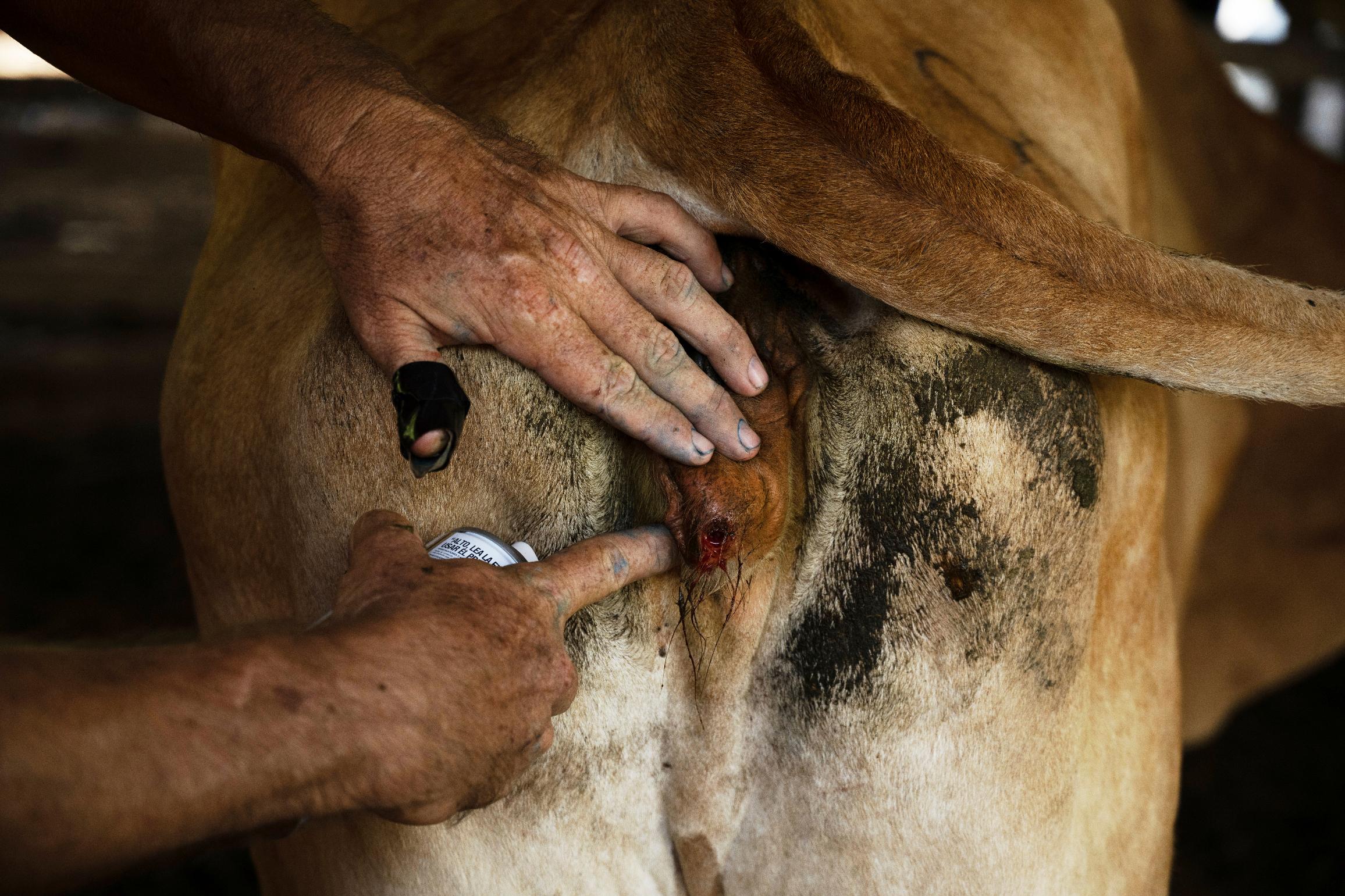
Ranchers across southern Mexico are facing a growing agricultural emergency as a parasitic outbreak wreaks havoc on their herds. A dangerous flesh-eating organism, known to burrow into the tissue of animals, is rapidly spreading across several regions, threatening the economic stability of farming communities and endangering the health of livestock on a large scale.
The parasite, scientifically identified as Cochliomyia hominivorax, is the larval form of a type of fly that lays its eggs in open wounds or mucous membranes. Once hatched, the larvae feed on the living tissue of their host, causing severe infections that, if untreated, can lead to permanent damage or death. While cases have been sporadically reported in the past, the current surge in infections is unprecedented in recent years.
For many small and medium-sized cattle producers in states such as Chiapas, Oaxaca, and Tabasco, livestock is the backbone of local economies. These animals are not only a source of income but also a vital link in the regional food supply chain. The resurgence of this parasitic infestation has placed enormous strain on ranchers already grappling with high feed costs, volatile weather conditions, and limited access to veterinary resources.
Farmers are experiencing increasing losses as animals affected by the parasite perish. Infected wounds frequently result in tissue death, and animals show signs of severe distress—making them unsuitable for sale or eating. In the most severe cases, whole herds have been put down to prevent further spread. Consequently, a number of ranchers are contemplating exiting the business entirely, as the expense of controlling the situation surpasses anticipated earnings.
One of the primary challenges in controlling the outbreak is the scarcity of affordable and effective treatment options. Many ranchers operate in remote areas with limited access to licensed veterinarians or government-funded animal health programs. Treatment typically involves a combination of wound cleaning, topical medications, and in some cases, systemic antiparasitics. However, these options are not always accessible to smallholders with tight budgets.
Moreover, preventing such issues demands attentiveness and resources, which a lot of producers do not have. Basic measures such as detecting injuries at an early stage, keeping infected animals separate, and applying insect repellents are challenging to maintain regularly on farms with limited staff. In the absence of organized assistance from agricultural officials, the responsibility for handling the crisis rests heavily on the local farmers.
Apart from its financial impact, the epidemic presents ecological challenges and possible threats to public health. Although the parasite mainly affects farm animals, it can also infect wildlife and, on rare occasions, people. In remote communities with restricted healthcare availability, a fly-exposed untreated wound has the potential to turn into a significant medical problem.
The resurgence of this parasite also creates apprehensions regarding the larger environment. Climate change, along with changing weather conditions, might be facilitating an environment that supports the breeding and expansion of the flies’ geographical reach. Furthermore, deforestation and the breaking up of habitats could lead to wildlife, livestock, and human groups being in closer proximity, thus raising the likelihood of transmission.
Mexican agricultural authorities have acknowledged the outbreak and have begun implementing targeted response measures. These include surveillance programs, distribution of medications, and public awareness campaigns on how to identify and treat infections. However, critics argue that the response has been uneven and reactive rather than preventative.
Historically, Cochliomyia hominivorax was almost completely eliminated in certain regions of Latin America thanks to a joint binational initiative involving the release of sterile flies. This program introduced sterilized male flies to the natural surroundings to curb their reproduction. Some specialists are advocating for the reconsideration of this approach, particularly in areas with elevated risk where standard control measures are not delivering results.
In the meantime, local associations and cooperatives are stepping in where they can, pooling resources and sharing knowledge among ranchers to minimize damage. These grassroots efforts, while commendable, may not be enough to stop the spread without broader institutional backing.
The impact of the outbreak might reach beyond the boundaries of Mexico. Being a significant exporter of beef and various livestock goods, any notion of uncontained disease outbreaks could threaten trade deals and global certifications. Buyers in nations with rigorous health regulations could postpone or halt imports until they receive guarantees of control.
This possibility puts additional pressure on government agencies to act swiftly and transparently. It also highlights the importance of maintaining strong biosecurity measures in livestock sectors, not only to protect domestic markets but also to safeguard cross-border economic relationships.
In the face of challenges, numerous ranchers continue to be dedicated to sustaining their means of living. For many generations, cattle farming has been a cultural and financial foundation in the south of Mexico. However, this lifestyle is under threat without substantial aid, which includes access to veterinary services and education, as well as the revival of pest control initiatives adapted to the region.
Tackling the spread necessitates a synchronized, multi-level approach. This involves the prompt isolation of ongoing cases, funding for long-range preventive actions, and cooperation among local communities, national bodies, and global health agencies.
Faced with an increasing threat from parasites, the determination of Mexico’s ranchers is clear. However, determination by itself cannot replace taking action. To protect cattle and the economic well-being of communities, making a new commitment to enhance animal health systems, environmental care, and rural progress is not only crucial—it is also immediate.