

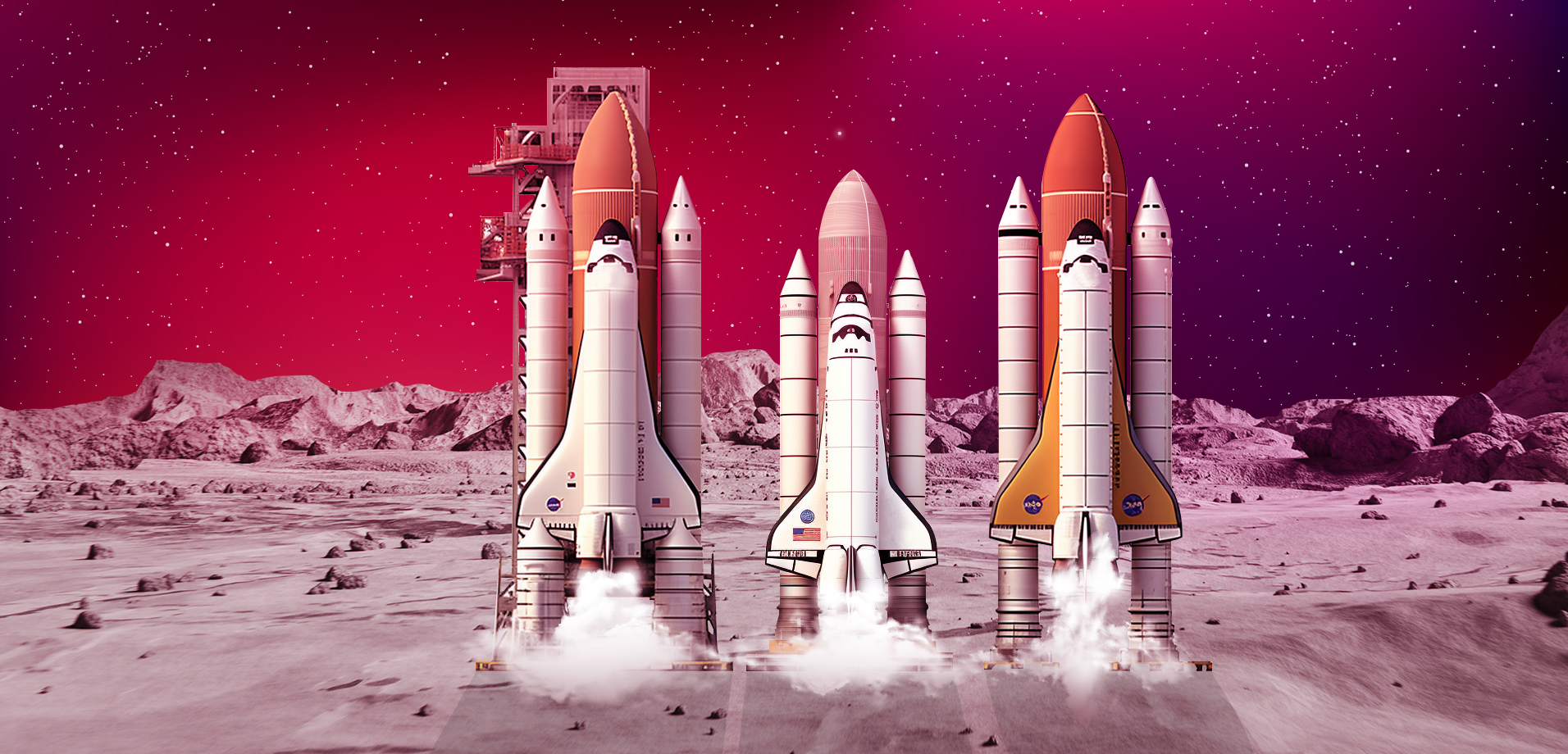
On September 17, 1976, a large hangar for aircraft in Palmdale, California, unveiled something remarkable—NASA’s inaugural space shuttle. The elegant, white spacecraft that emerged was not merely an engineering feat. It was poised to become a cultural icon. Its designation? Enterprise. Although this name had connections to naval history and forward-thinking appeal, it wasn’t NASA’s initial choice. In reality, the alteration came about because of a spirited grassroots movement by devoted followers of a specific science fiction TV series whose mission was “to boldly go where no man has gone before.”
The space shuttle Enterprise was initially slated to be called Constitution, a name meant to honor the United States’ foundational document during its bicentennial. But what followed was a testament to how fandom, public pressure, and government interests can converge in unexpected ways.
At the core of this initiative were John and Bjo Trimble, a couple from California whose commitment to Star Trek had previously prevented the show from being canceled during its initial broadcast. Utilizing their organizational expertise and broad network of supporters, the Trimbles initiated a structured effort of letter writing directed at NASA and the White House. The strategy was straightforward but impactful: rechristen the shuttle to bear the name of the Star Trek spacecraft Enterprise, a ship that had sparked the imagination of millions regarding space travel.
The White House got a multitude of letters, leading to internal talks among the officials. William Gorog, an assistant to President Gerald Ford, tackled the increasing public curiosity in a memo. He pointed out that associating the shuttle’s name with a cherished cultural icon might boost public backing for the space initiative and provide a timely lift in national excitement for scientific advancement.
President Ford, himself intrigued by the idea, approved the recommendation. NASA Administrator James Fletcher also saw value in the proposal, recognizing how public sentiment could strengthen the agency’s connection with American citizens. On September 3, 1976, the name was officially changed to Enterprise.
The unveiling of the shuttle marked a momentous occasion. Present at this milestone were dignitaries, engineers, and military personnel, joined by the Star Trek cast members—such as Leonard Nimoy and Nichelle Nichols—who observed with pride as the shuttle appeared, accompanied by the stirring melodies of the Star Trek theme, played by the U.S. Air Force band.
Although the Enterprise never reached orbit, it played a crucial role in shaping NASA’s shuttle program. From 1976 to 1981, the vehicle was used in a series of atmospheric flight tests that helped engineers refine designs for future orbiters. These unpowered glide tests provided critical data, ensuring that the shuttle program’s eventual launches would be successful.
The shuttle fleet that followed—Columbia, Challenger, Discovery, Atlantis, and Endeavour—owed a great deal to the groundwork laid by Enterprise. Even though it lacked engines and heat shielding necessary for orbital missions, its contribution to safety testing and procedural development made it an indispensable stepping stone toward operational spaceflight.
Apart from the engineering and regulatory aspects, the tale of Enterprise is an examination of the intersection between public creativity and scientific progress. By choosing the name of a fictional spaceship from a TV show for the shuttle, NASA connected imaginative narratives with real-world technology advancements. This decision affirmed the dreams of countless enthusiasts, many of whom later chose professions in science, technology, and space exploration.
One of the most notable legacies of this cultural crossover was Nichelle Nichols’ involvement with NASA. Known for her groundbreaking role as Lieutenant Uhura, Nichols was recruited by the agency in the late 1970s to help diversify its astronaut corps. Her recruitment campaigns played a pivotal role in bringing more women and minorities into the space program, helping reshape its public image and workforce.
With the passage of time, the relationship between NASA and Star Trek grew stronger. Elements like mission insignias, crew monikers, and call signs started to show the impact of science fiction. Space travelers frequently mentioned how the series motivated them to fantasize about space, while Star Trek cast members often attended NASA occasions, representing the lasting connection between actual exploration and imaginary journeys.
In 2012, after decades of testing, public exhibition, and transport, the shuttle Enterprise made its final journey—by air, road, and barge—to the Intrepid Sea, Air & Space Museum in New York City. Once again, several Star Trek cast members gathered to pay tribute to the shuttle that bore the name of their fictional ship. This final transfer was more than a relocation; it was a ceremonial closure of a chapter in both space history and cultural memory.
Interestingly, the influence of the fan-led naming didn’t stop with Star Trek. Encouraged by Enterprise’s success, Star Wars fans launched their own campaign to name a shuttle after the Millennium Falcon. Despite the effort, their initiative didn’t bear fruit, but it did further cement the deep connections between popular science fiction and the American space narrative.
The story of Enterprise remains a unique case of a government agency responding directly to the will of a dedicated fan base. It exemplifies the potential for public advocacy to influence even the most technical and bureaucratic institutions. And it highlights how the dreams ignited by television and film can ripple outward into real-world achievements—driving innovation, sparking curiosity, and inspiring generations to look up at the stars.
In retrospect, Enterprise was never just a prototype spacecraft. It was a symbol of a new era—one that honored the imagination as much as the intellect, and which saw value in merging scientific rigor with cultural resonance. Through the efforts of fans like the Trimbles, and the openness of leaders willing to listen, the name of a fictional starship became part of the history of space exploration.
Currently, with upcoming missions gearing up to send humans to the Moon once more and further, the tale of Enterprise stands as a reminder: the boundary of space is defined not only by scientists and spacemen but also by visionaries, narrators, and enthusiasts who trust in potential achievements.