

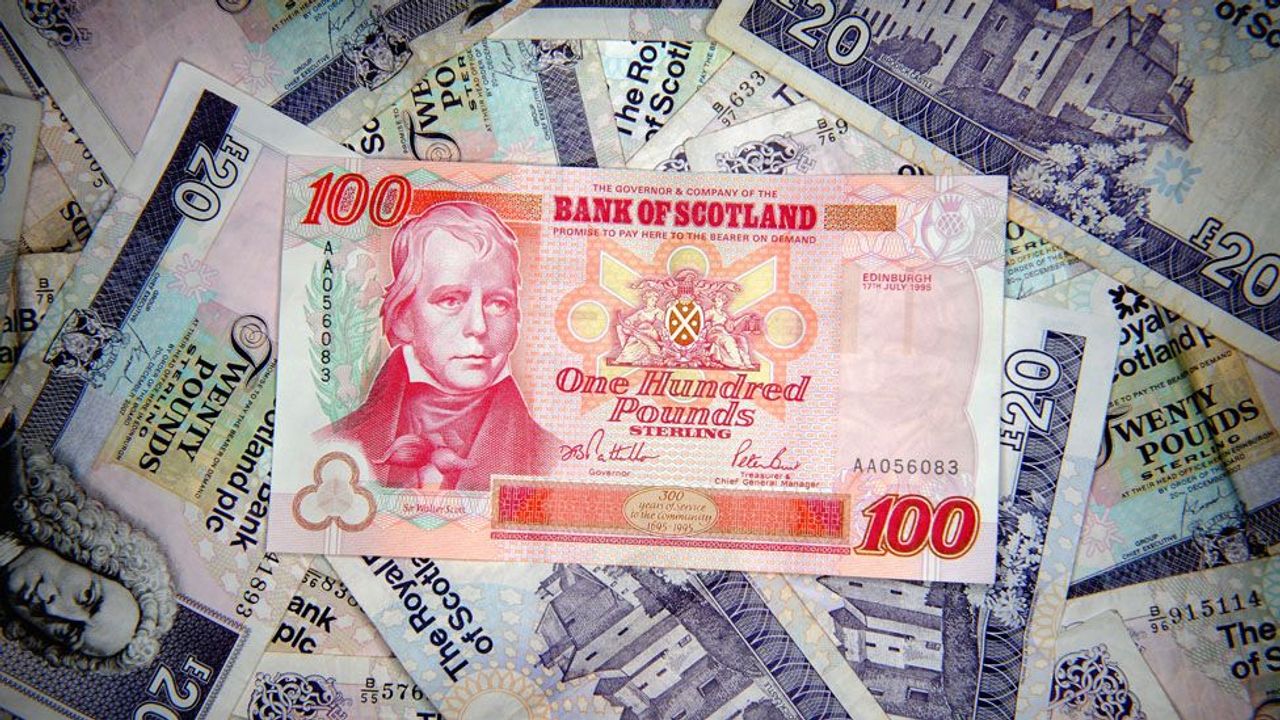
A substantial quantity of obsolete money in the United Kingdom continues to go unexchanged, with nearly £6.6 billion in old banknotes and coins still not returned to the Bank of England and Royal Mint. Despite various public initiatives encouraging people and companies to swap outdated currency, many of these notes and coins remain in use—or have been completely overlooked.
The figure includes both paper banknotes that have been replaced by more secure polymer versions and round pound coins that were withdrawn from legal tender status several years ago. According to recent data, roughly £4.4 billion of the total sum is made up of old paper banknotes, while the remaining £2.2 billion consists of outdated £1 coins.
The transition to polymer banknotes began in 2016 with the introduction of the plastic £5 note, followed by new versions of the £10, £20, and £50 notes. The paper versions have been phased out due to durability concerns and the need to combat counterfeiting with more secure features. However, the paper notes have not completely disappeared from wallets, drawers, or even jars tucked away in people’s homes. Many individuals may not even realize that these notes are no longer legal tender for transactions.
Although they can no longer be used in shops or for everyday payments, the Bank of England has confirmed that all withdrawn banknotes can still be exchanged at face value—either by post or in person—without a deadline. The Bank also allows some high-street banks and building societies to process these exchanges, but practices vary by institution and depend on whether the person holds an account with the bank.
A similar situation exists with the £1 coin. The Royal Mint replaced the original round pound in 2017 with a 12-sided version featuring enhanced security features. The older coins were formally demonetized in October of that year, yet millions remain unreturned. Although most major retailers and banks stopped accepting the round pound shortly after the deadline, the Royal Mint continues to accept them via specific deposit services.
The reasons for this vast sum of unreturned currency are varied. Some people may have held on to older notes or coins as souvenirs, while others may have unintentionally misplaced them. It’s also common for travelers and expatriates to retain small amounts of UK currency when living abroad, unaware that the notes or coins have since been withdrawn from use. In other cases, forgotten savings stored in piggy banks, safes, or drawers can go unnoticed for years.
The issue reflects a broader behavioral pattern among the public, where changes in currency design often lead to a lag in adoption. When new designs are introduced, many people don’t immediately rush to exchange the old versions, especially if the amounts involved are relatively small or stored away for long-term savings. Over time, these accumulated amounts become part of the larger total of unredeemed currency.
From a financial perspective, unreturned notes and coins can represent a liability on the central bank’s balance sheet. While the physical money is no longer in active circulation, the Bank of England and Royal Mint must still account for it until it is formally redeemed. In essence, the value of this unredeemed currency remains as a claim that could potentially be exercised by the public at any time.
For collectors, some of these older banknotes and coins may now hold value beyond their face amount. Rare editions or error prints—such as early polymer notes with printing anomalies or certain commemorative coins—can fetch higher prices in the numismatic market. However, for the vast majority of outdated currency still held by the public, the main value lies in their exchangeability rather than any collectible worth.
Both the Bank of England and Royal Mint continue to encourage the public to return or exchange outdated currency when found. This not only ensures that holders can reclaim the full face value of the money but also helps maintain a cleaner, more efficient currency system. Public awareness efforts have included online campaigns, information shared through financial institutions, and advisories from consumer advocacy groups.
For those who have older banknotes, the Bank of England has a mail service enabling people to send their notes along with a completed form. Usually, the exchanged amounts are reimbursed through cheque or bank transfer. Likewise, the Royal Mint offers details on how to return old £1 coins via deposit accounts or donation programs.
Ultimately, the persistent presence of outdated currency serves as a reminder of the public’s diverse financial habits and the enduring challenge of modernizing a national cash system. As digital payments grow and the use of physical currency declines, the pace of cash circulation changes may accelerate. Nevertheless, billions in outdated coins and notes continue to sit unused, quietly waiting to be exchanged—if they are remembered at all.